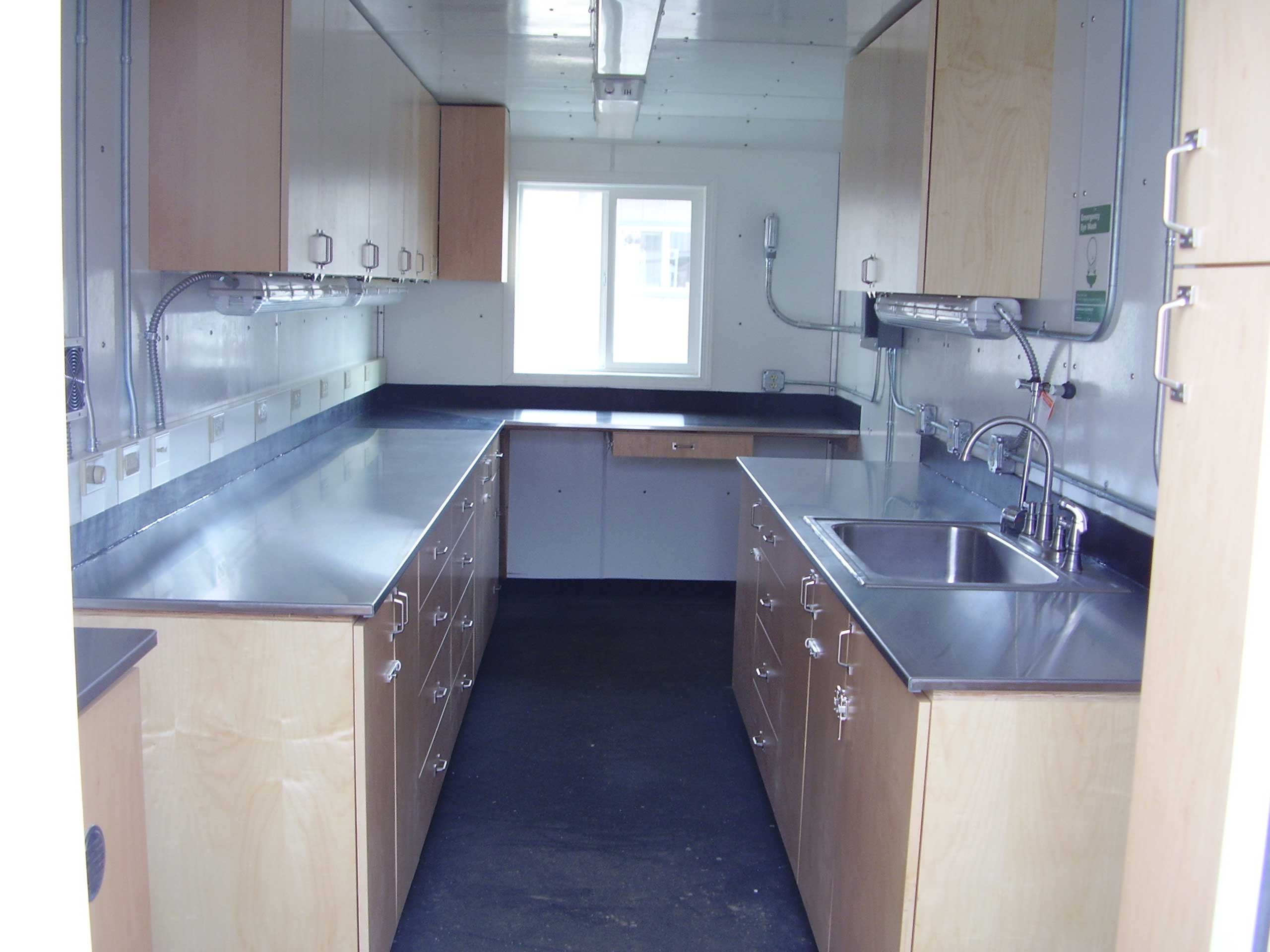
Remote Operations Infrastructure
Designing Container-Based Bathrooms, Showers, and Kitchens
Published September 2026
By: Container Specialties of Alaska, Inc.
Establishing a functional remote worksite in Alaska requires more than simply transporting equipment and personnel to a location. Whether supporting an industrial operation, construction project, or remote field camp, providing reliable sanitation, hygiene, and food preparation facilities is essential for daily operations.
Traditional permanent construction can be expensive, time-consuming, and impractical in isolated regions. Modified shipping containers offer an alternative: durable, transportable infrastructure that can be customized into fully functional bathrooms, shower facilities, and commercial or residential-style kitchens.
However, converting a steel shipping container into a comfortable, fully equipped facility requires careful engineering. From managing extreme temperature fluctuations to designing reliable plumbing and electrical systems, every component must be considered before deployment.
Understanding the Technical Terminology
When designing container-based facilities for remote environments, understanding several fundamental construction and engineering concepts is essential:
- Thermal Bridging: The transfer of heat through conductive materials, such as the steel walls and framing of a shipping container. Without proper insulation, thermal bridging can cause significant heat loss and interior condensation during Alaska's cold winters.
- Greywater vs. Blackwater: Greywater is wastewater generated from sinks and showers, while blackwater contains waste from toilets. Both require appropriate plumbing, collection, and disposal systems, particularly at remote sites without municipal sewer connections.
- GFCI (Ground Fault Circuit Interrupter): An electrical safety device designed to interrupt power when a ground fault is detected. GFCI protection is especially important in bathrooms, kitchens, and other locations where electricity and water may come into contact.
- PEX Piping: Cross-linked polyethylene piping commonly used in modern plumbing systems. Its flexibility and corrosion resistance make it a practical option for customized container installations when appropriately protected against freezing.
Engineering for Alaska's Extreme Climate
One of the greatest challenges in converting shipping containers into occupied facilities is maintaining consistent interior temperatures. Standard cargo containers are constructed primarily from steel, which readily conducts heat and cold.
During Alaska's winter months, an uninsulated container can quickly become unsuitable for plumbing, food preparation, or personal hygiene. Proper insulation, interior wall construction, and climate-control systems are therefore essential components of a successful conversion.
Designers must account for thermal bridging, particularly around structural framing, doors, windows, and other penetrations through the container walls. Addressing these areas helps reduce heat loss and minimizes the risk of condensation accumulating inside the facility.
Heating and ventilation systems also play an important role. Bathrooms and shower facilities produce substantial moisture, making controlled ventilation necessary to reduce humidity and protect interior surfaces. Kitchens introduce additional ventilation considerations due to cooking equipment, heat, and airborne moisture.
Designing Reliable Plumbing and Sanitation Systems
Transforming a shipping container into a bathroom or shower facility requires a carefully planned water supply and wastewater management system.
Depending on the location, the unit may connect to existing municipal infrastructure or rely on independent water storage and wastewater collection systems. Remote operations often require specialized arrangements because traditional utility connections may not be available.
For bathroom and shower conversions, important considerations include:
- Water Supply: Establishing a reliable source of fresh water and determining whether storage tanks, pumps, or external utility connections will be required.
- Wastewater Management: Planning appropriate greywater and blackwater collection, drainage, and disposal systems.
- Freeze Protection: Insulating plumbing lines, protecting vulnerable connections, and incorporating suitable heating measures to reduce the risk of frozen or damaged pipes.
- Interior Layout: Positioning toilets, sinks, showers, and associated plumbing to maximize usable space while maintaining accessibility and serviceability.
- Maintenance Access: Providing sufficient access to valves, pumps, drains, and other essential components for inspections and repairs.
PEX piping can provide flexibility when routing water lines through confined spaces. However, even flexible plumbing materials require appropriate insulation and temperature management in Alaska's climate.
Electrical Infrastructure and Safety
Container-based bathrooms, showers, and kitchens also require electrical systems designed around their intended use.
Lighting, ventilation, water heaters, pumps, heating equipment, and kitchen appliances can all contribute to a facility's electrical load. Proper planning helps determine whether the finished container will use a conventional utility connection, generator power, or another suitable electrical supply.
Because these facilities frequently contain water and moisture, electrical safety is particularly important. Appropriate GFCI protection, grounding, wiring methods, and equipment placement must be incorporated into the design.
For kitchen conversions, electrical planning may also include dedicated circuits for refrigerators, cooking equipment, ventilation systems, and other appliances.
All plumbing and electrical installations should be designed and completed in accordance with applicable codes and site requirements.
Customizing Container-Based Kitchens
Shipping containers can also be modified into practical kitchen facilities for remote crews, seasonal operations, and other locations where permanent construction is not feasible.
Depending on the intended application, a kitchen conversion may incorporate countertops, cabinetry, sinks, food storage, refrigeration, cooking equipment, and dedicated ventilation.
Efficient interior layouts are particularly important because a standard shipping container has a relatively narrow footprint. Equipment placement, work surfaces, storage, and pathways must be planned to support the intended number of users and the type of food preparation taking place.
Insulation, climate control, durable interior finishes, and appropriately designed utility connections help create a kitchen that can function reliably under demanding working conditions.
Transportation and Deployment to Remote Sites
One of the primary advantages of container-based infrastructure is its transportability. Unlike conventional permanent buildings, modified containers can be prepared off-site and transported to their intended location.
However, completed bathroom, shower, and kitchen units can contain substantial additional weight from insulation, interior framing, water tanks, fixtures, appliances, and mechanical systems. These modifications must be considered when developing a transportation plan.
Container Specialties of Alaska, Inc. provides specialized trucking services for moving shipping containers throughout Alaska, including locations between Homer and Fairbanks.
With specialized heavy-duty trailers and side-loading equipment, the company can support container placement and relocation while reducing the need for separate lifting equipment in suitable circumstances.
Proper site preparation remains essential. Delivery locations should provide adequate ground stability, vehicle access, overhead clearance, and space for safe container placement.
Building Practical Infrastructure for Alaska's Remote Operations
Container-based bathrooms, showers, and kitchens provide a flexible approach to establishing essential facilities in demanding environments. Through careful planning, these units can combine durable steel construction with the plumbing, electrical, insulation, and interior features required for their intended use.
Container Specialties of Alaska, Inc. has been modifying shipping containers since the 1980s, creating custom solutions ranging from field offices and cabins to kitchens, bathrooms, and shower facilities.
As an Alaskan family-owned and operated business, we understand the logistical and environmental challenges involved in deploying infrastructure across the state. Our container modification and transportation services help customers develop practical solutions tailored to their projects.
Whether you're planning a remote workforce facility, an industrial field camp, or a custom container conversion, contact our team to discuss your project requirements and available options.
Contact Us Today To Start Your Project!
Container Specialties of Alaska, Inc. – Your Partner in Innovative, Durable Container Modifications.