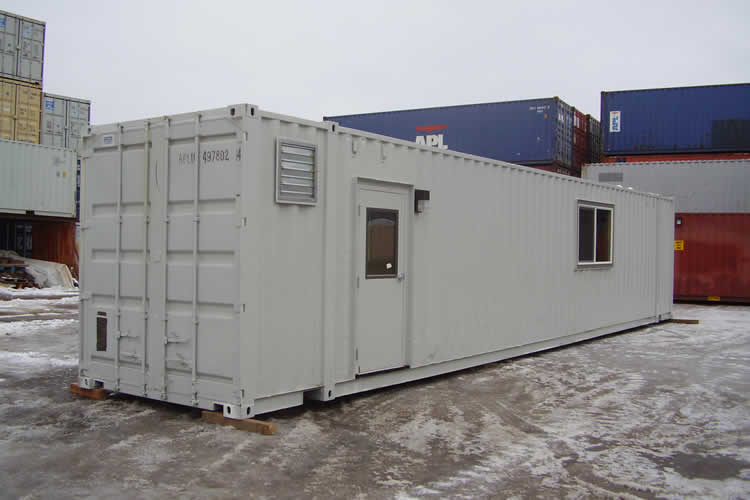
Transforming Healthcare Access:
How Modified Shipping Containers Create Flexible Clinics & Wellness Centers
Published May 2026
By: Container Specialties of Alaska, Inc.
A Guide to Adapting Containers for Clinical, Fitness, and Therapeutic Use with Safety and Accessibility in Mind
The landscape of healthcare and wellness is evolving. The need for flexible, scalable, and rapidly deployable facilities has never been greater, whether for expanding services in urban centers, reaching rural communities, or creating dedicated wellness spaces.
This article explores the practicalities, modifications, and critical considerations involved in transforming standard steel containers into fully functional clinical spaces, fitness studios, or mental wellness centers. Our goal is to provide a clear, professional resource for anyone considering this efficient and sustainable construction alternative.
Why Consider a Container for Healthcare or Wellness?
Shipping containers offer a unique set of advantages for medical and wellness applications:
- Speed of Deployment:
A modified container can be fabricated off-site while site work proceeds, drastically reducing on-site construction time and disruption.
- Mobility:
Containers are inherently portable. A clinic can be relocated to follow community needs, or a wellness pod can be moved to a new campus location.
- Cost-Effectiveness:
Utilizing a container’s existing robust structure can offer a lower total project cost compared to traditional stick-built facilities.
- Durability & Security:
Made from Corten steel, a high-strength and weather-resistant steel alloy, containers are built to withstand harsh conditions and provide a secure shell for valuable medical equipment.
Phase 1: Planning & Core Considerations
Before any cutting or welding begins, a successful project starts with meticulous planning focused on function and compliance.
- Define the Primary Use Case:
The required modifications differ significantly between a primary care clinic, a dental suite, a physical therapy gym, and a yoga studio. Start with a detailed list of required rooms such as a waiting area, exam room, lab, bathroom, and any specialized equipment.
- Understand Code & Compliance:
This is non-negotiable. Facilities must adhere to:
- Building Codes: Including the International Building Code (IBC) for structural safety, egress, and occupancy.
- Healthcare-Specific Regulations: For clinical spaces, this may involve guidelines from the Facility Guidelines Institute (FGI) and state health departments, covering room sizes, surface finishes, and infection control.
- Accessibility: Strict compliance with the Americans with Disabilities Act (ADA) is required. This governs doorway widths, ramp slopes, restroom layouts, and fixture heights.
- Site Logistics:
Consider placement, foundation requirements, utility hookups such as power, water, sewer, and medical gas if needed, along with delivery and set procedures.
Essential Modifications for Healthcare & Wellness Facilities
Here’s a breakdown of key modifications, moving from the shell inward.
Structural & Shell Modifications
- Cutting & Framing:
Openings are cut for doors, windows, and pass-throughs, then reinforced with steel framing to maintain structural integrity.
- Joining Containers:
For larger facilities, multiple containers can be joined side-by-side or stacked, with seams welded and weather-tightened to create a seamless interior space.
- Roofing:
A secondary roof or standing seam metal roof can be added for superior insulation, weather protection, and condensation control.
Climate Control & Insulation
A stable interior environment is critical for patient comfort, equipment operation, and medication storage. This often includes:
- Insulation:
High-performance spray foam or rigid board insulation can be applied to the walls, ceiling, and floor to create a thermal and vapor barrier.
- HVAC System:
A dedicated heating, ventilation, and air conditioning system can be installed. For clinical spaces, filtration and humidity control may also be necessary.
Interior Build-Out & Finishes
- Framing & Utilities:
Interior non-load-bearing walls are framed, and electrical, plumbing, and data lines are routed within the walls and ceiling before insulation and drywall.
- Healthcare-Grade Finishes:
Walls may be finished with moisture-resistant drywall and durable paint. Flooring options can include sheet vinyl, luxury vinyl plank, or rubber flooring depending on the use case.
- Millwork:
Custom cabinets, nurse stations, and built-in shelving can be fabricated to maximize space and support daily operations.
Specialty Systems & Safety
- Plumbing:
This includes standard restroom plumbing and, for clinics, potentially specialized plumbing for exam room sinks or dental units.
- Electrical:
These spaces require a strong electrical service panel, ample outlets, dedicated circuits for medical equipment, and appropriate task and ambient lighting.
- Accessibility Features:
ADA-compliant door hardware, accessible restrooms, grab bars, tactile signage, and integrated ramps or lifts can all be incorporated.
Spotlight on Accessibility and Safety
These principles should be foundational, not added later as an afterthought.
- Accessibility:
Every design decision should be filtered through an accessibility lens. This includes 36-inch minimum door widths, 5-foot turning circles in bathrooms and exam rooms, accessible counters, and clear corridors.
- Safety:
In addition to structural safety, consider slip-resistant flooring, rounded millwork corners, emergency eyewash stations where appropriate, clearly marked fire exits, and fire extinguishers. For mental wellness spaces, ligature-resistant fixtures may also be specified.
From Concept to Reality: Potential Applications
- Mobile Medical Clinic:
A single or double-container unit with a waiting area, exam rooms, and a lab or nurse station, serving remote communities.
- Dental Suite:
A container layout designed for an operatory, X-ray area, sterilization room, and business office.
- Physical Therapy & Rehabilitation Center:
Modified with high ceilings, rubber flooring, mirrored walls, and space for therapeutic equipment.
- Mental Health Counseling Center:
Designed as a calm, private environment with soundproofing, natural light, and welcoming reception space.
- Corporate or Campus Wellness Pod:
A compact space for fitness classes, massage therapy, or meditation that supports employee wellness.
Partnering for a Successful Project
Transforming a shipping container into a code-compliant, patient-ready facility requires expertise in construction, engineering, and planning. It is a collaborative process from the first sketch to the final inspection.
At Container Specialties of Alaska, we work with you, and often with your architect or medical planner, to ensure the design meets your clinical and operational needs while adhering to all necessary regulations. We handle the complex fabrication so you can focus on delivering care.
Have a concept for a community clinic, a specialized therapy space, or a wellness retreat? We’re here to help you explore the possibilities. For a detailed discussion on your unique project needs and ideas, please feel free to reach out to our team or use our Request a Quote form to start the conversation.
Contact Us Today To Start Your Project!
Container Specialties of Alaska, Inc. – Your Partner in Innovative, Durable Container Modifications.